Khon masked dance: what to know before you go
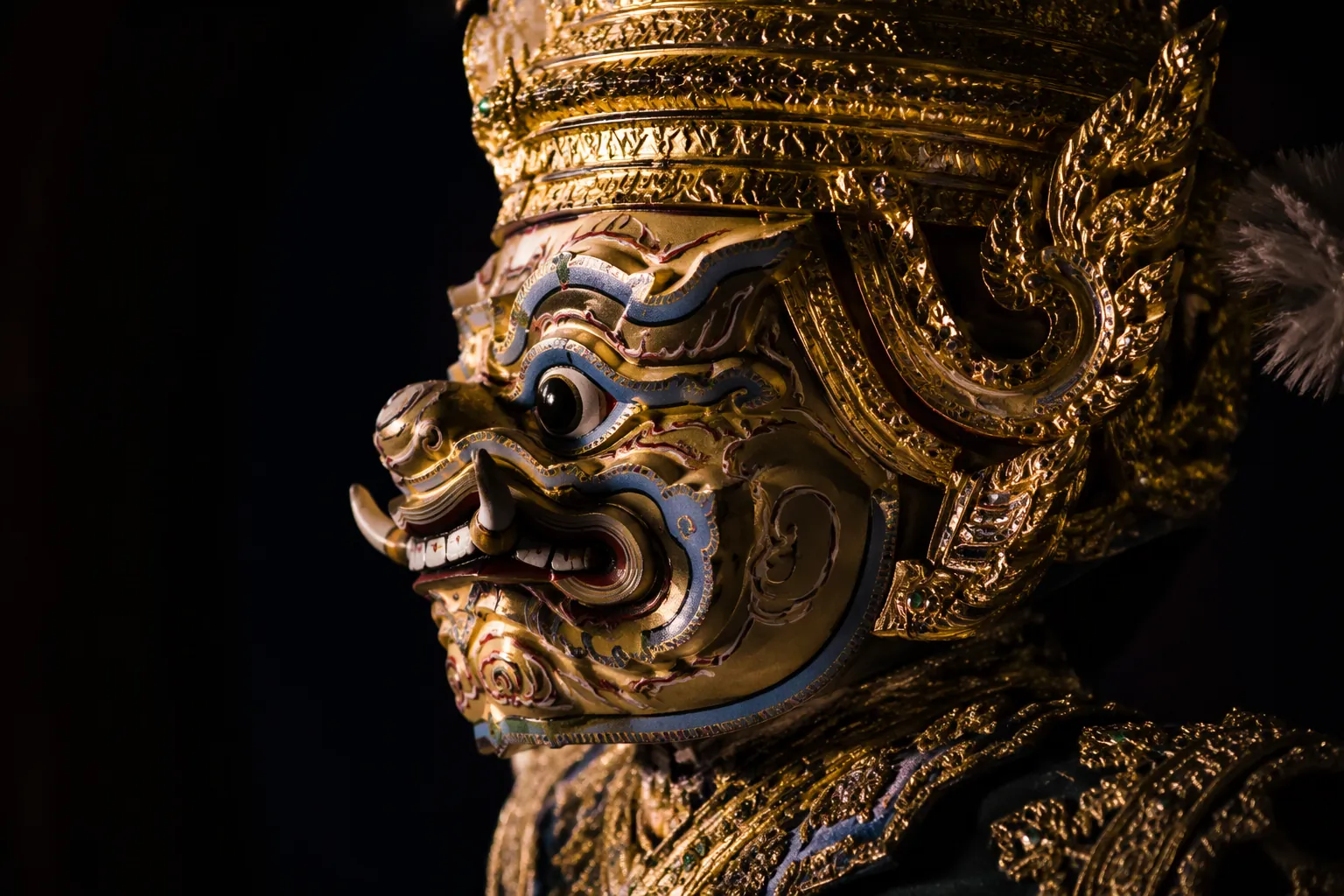
- What: Thailand's classical masked dance drama, performing episodes of the Ramakien epic. UNESCO listed since 2018.
- Where: Sala Chalermkrung Royal Theatre (old town, near the Grand Palace). The easiest way in.
- When: Evening performances a few nights a week, roughly 90 minutes; tickets ~800–1,200 baht.
- English friendly: subtitles provided; the story is mainly visual.
- Book: ahead via Thai Ticket Major, especially weekends.
There is a moment in every khon performance when the monkey army floods the stage and you realize you have forgotten to read the subtitles for ten minutes. That is the correct way to watch khon. This article is everything else: what you're seeing, why it counts, and how to get a seat.
Scene IWhat khon is
Khon is Thailand's classical masked dance drama, and for centuries it belonged to the royal court. A troupe of dancers, men, traditionally, playing every role, enacts episodes of the Ramakien, Thailand's national version of the Ramayana, through one of the most codified movement languages on earth. The dancers do not speak: a chorus sings the narration from the side of the stage, carried by a piphat orchestra of xylophones, gongs and oboe like pi.
In 2018, UNESCO inscribed khon on its list of Intangible Cultural Heritage, recognition that this is not folklore preserved in aspic but a living discipline, still taught to children who train for a decade before touching a principal mask. If you want the story underneath before you go, our Ramakien in ten scenes is the fifteen minute version.
Scene IIThe four faces of khon
Khon's characters fall into four types, and the mask tells you which is which before anyone moves:
| Type | Mask? | Who they are | How to spot them |
|---|---|---|---|
| Male | No: painted face | Phra Ram, the hero prince | Green gold complexion, serene expression, tall headdress |
| Female | No: painted face | Nang Sida, the abducted queen | The most delicate movement vocabulary on stage |
| Demon (yak) | Yes | Thotsakan (Ravana) and his army | Fierce bulging eyed masks; Thotsakan's is multi faced and gold crowned |
| Monkey | Yes | Hanuman and the monkey army | White jawed Hanuman mask; acrobatic, comic, everywhere at once |
Only demons and monkeys wear full masks. A rule with a practical upside: the two most striking character types are the two whose faces are pure sculpture. A khon mask takes weeks to make and years to learn to wear; dancers describe the mask as something they serve rather than something they use. Watch how a masked character turns: the whole torso moves, because the mask cannot.
Scene IIIHow a performance works
A khon evening is three art forms running in parallel. On stage, the dancers mime the episode in slow, hyper controlled steps punctuated by explosive battle choreography. Stage left, the chorus sings the narrative in classical Thai verse. Below, the piphat orchestra sets tempo and mood. You'll feel the battles in the drum line before you parse them on stage.
Newcomers should know two things. The pace is deliberate: khon rewards watching hands, feet and balance rather than waiting for plot. And the plot, honestly, is the least of it. You are watching seven hundred years of court culture executed at concert pitch. Read the two paragraph synopsis in the programme, then put it down and watch.
Scene IVWhere to see khon in Bangkok
Sala Chalermkrung Royal Theatre: the way in
The Sala Chalermkrung, on Charoen Krung Road near the Grand Palace, is Bangkok's great gift to the curious: a 1933 Art Deco theatre staging a visitor friendly khon production, typically episodes following Hanuman, with English subtitles, a running time of about 90 minutes, and evening shows a few nights a week. Tickets run roughly 800–1,200 baht through Thai Ticket Major. It is the single best introduction to khon in the city: short enough, clear enough, and staged in a jewel of a room.
Royal khon at the Thailand Cultural Centre
Once or twice a year, the Fine Arts Department mounts a full royal khon production at the Thailand Cultural Centre: the grand scale, dozens of dancers, the complete spectacle. These sell out far in advance and are worth planning a trip around; watch the Cultural Centre's announcements.
Hotel and dinner show versions
Short khon excerpts appear in some hotel cultural shows. They make a pleasant introduction but are to khon what a poster is to a painting. If an excerpt moves you, see the real thing.
Getting there: Sala Chalermkrung sits in the old town, taxi or the Chao Phraya river boat to the Flower Market side is easiest at showtime. Dress: smart casual; this is a royal theatre, not a temple, but beachwear looks wrong. Arrive: 30 minutes early. Phones: away during the performance. No photography.
Scene VHow to watch (and enjoy) it
- Read the synopsis, then stop reading. Two paragraphs are enough. Khon is not opera. You are not meant to follow every word.
- Watch one thing at a time. A song for the hands. A song for the monkey army's footwork. A song just for the drummer.
- Wait for the battles. Whatever you think of the first ten minutes, stay for the monkey–demon clashes. The choreography everyone photographs is earned by the stillness before it.
- Applaud like you mean it. These dancers train from childhood; a full house that responds is part of the art form's survival.
Scene VIFrequently asked questions
More at the opera
The Ramakien, explained in ten scenes
The story every mask on that stage is telling.
IV · VenuesBangkok theatres & concert halls: where to sit
Where to sit at Sala Chalermkrung and everywhere else.
V · GroupsThe best cultural shows in Bangkok for groups
When you're booking for twenty, not two.