Thai dance at gala dinners: what's authentic
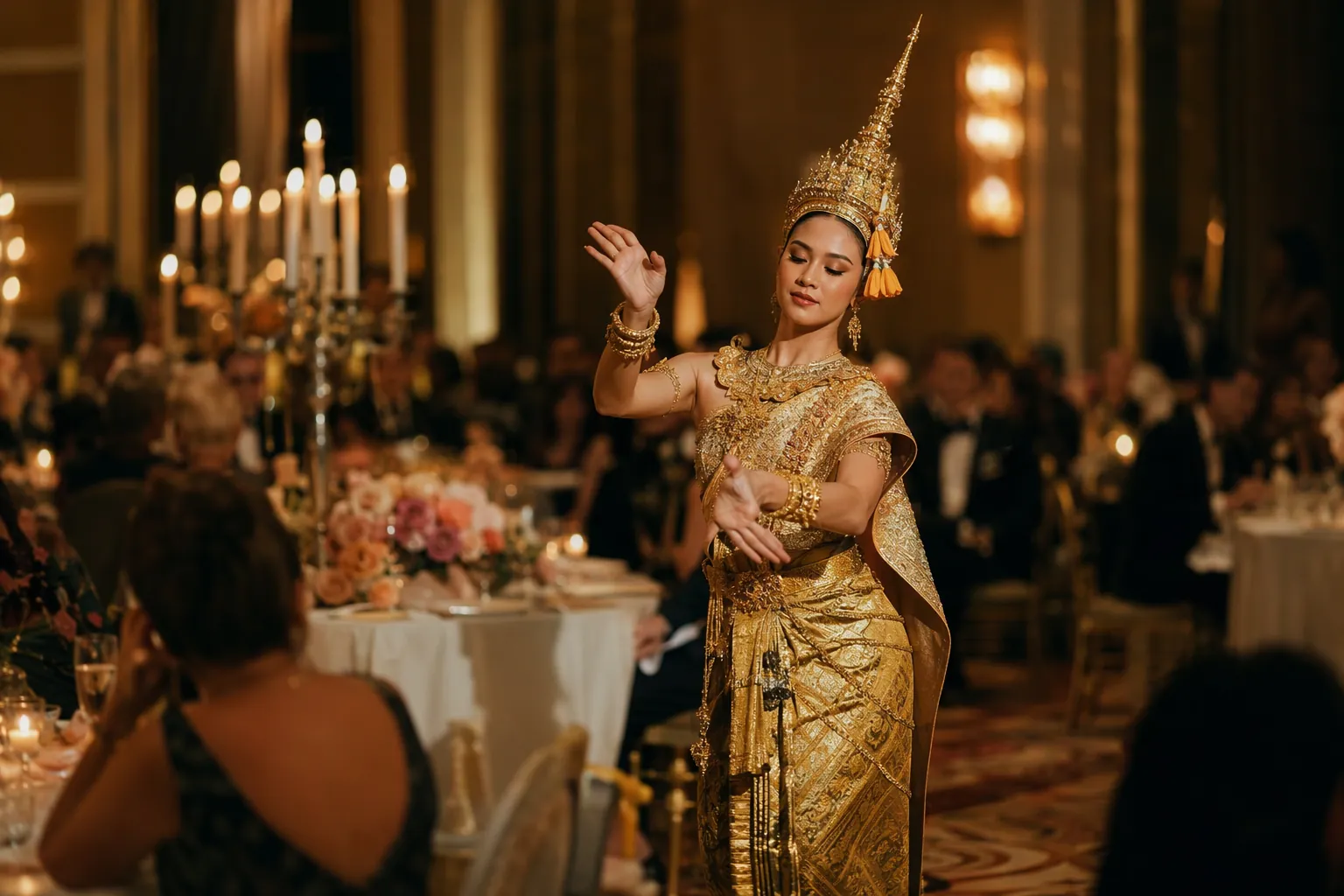
- The gala worthy four: khon excerpt (spectacle), fawn leb (elegance), fawn tian (atmosphere), ram wong (participation).
- Structure it as two or three short sets (8–15 min) between courses. Never one long show competing with dinner.
- Editorial cost estimate: ~30,000–80,000 baht per set for a professional Bangkok troupe, depending on size and live music.
- The line not to cross: the chada headdress is sacred: photos yes, dress up no.
Every gala dinner in Bangkok eventually gets "something Thai" between the main course and dessert. Done well, twenty minutes of classical dance is the thing guests mention for years. Done carelessly, it's a costume rental with choreography by committee. The difference is knowing which dances are real, what they need, and where the respectful lines are.
Scene IThe four dances that belong on a ballroom stage
A masked battle scene from the Ramakien, Hanuman versus the demons, is the most dramatic ten minutes available to an event in Thailand. It requires specialist masked dancers (khon training is its own discipline), so it costs more and needs a proper stage or clear floor area. Worth it for the headline moment. See the khon article for what your guests will be watching.
The northern Thai "finger dance": dancers in Lanna costume wearing long brass fingernail extensions, moving in hypnotic unison. Slow, precise, mesmerizing, and quiet. Fawn leb is the perfect between courses piece: it asks for and rewards attention without demanding the room stop eating.
The candle dance: each dancer carries a lit candle, tracing arcs of flame in a darkened room. Eight minutes of pure atmosphere, ideal as an opening or a finale. Requires the venue to dim: coordinate with the banquet team early, because "lights down" is a production cue, not a request shouted across the room.
The social circle dance of Thai celebrations: simple, gracious, and built for guests to join. End the evening with the troupe leading ram wong and half your ballroom will be dancing within two minutes. The best icebreaker a conference dinner can buy, and the one form where audience participation is the point rather than a breach.
Scene IIWhat authentic looks like
- Lineage. Real classical dancers train for years, typically through Thailand's College of Dramatic Arts system or respected private schools. Ask where the troupe trained; a professional answer comes instantly.
- The wai khru. Performances begin with a ritual homage to teachers and tradition: brief, kneeling, genuinely moving. It is the art form's living heart. Schedule speeches around it, never over it.
- Live musicians where possible. A small piphat or khruang sai ensemble transforms the set; recorded tracks are acceptable for ballrooms, but live drums change the air in the room.
- Correct costume, correctly worn. The gold is real thread; the chada headdress is fitted, not plonked. If costumes look like a fancy dress shop, they are.
Scene IIIThe lines not to cross
- The chada is sacred. The tall spired crown has religious significance in classical tradition. Photos with dancers after the set: wonderful. Guests trying on headdresses: no. A professional troupe will offer a photo moment on its own terms.
- Don't chop a piece mid phrase for a speech. Classical sets have an arc; if the CEO must speak at 21:00 sharp, end the set at 20:50.
- Don't stage quiet pieces during loud courses. Fawn tian during the clatter of the main course is a waste of both. Line up set times with the kitchen's rhythm, not against it.
- Don't ask for "something more modern/fusion" from a classical troupe. If you want pop Thai fusion, book a contemporary crew. They're excellent and differently priced. Asking classical artists to dilute the form insults the very authenticity you're paying for.
Scene IVHow to brief the troupe
One page, four blocks:
- The room: floor area available (khon excerpts need roughly 6×6 m clear), ceiling height, if the venue can dim, where musicians sit.
- The run of show: exact set times against courses, in minutes: "Set 1: 20:05–20:15, between starter and main."
- The audience: size, nationalities, formality. A troupe programs differently for 60 Thai executives than for 300 international incentive guests.
- The photo moment: agree it in advance: five minutes after the set, a designated spot, dancers posed. Everyone gets the shot; nobody grabs a headdress.
As an editorial estimate, professional Bangkok troupes quote from around 30,000–80,000 baht per set depending on dancer count, live versus recorded music, and if a khon segment is included. Ask for video of a recent corporate performance, not a showreel montage, before you sign. For the shows you can take guests to instead, see cultural shows for groups.